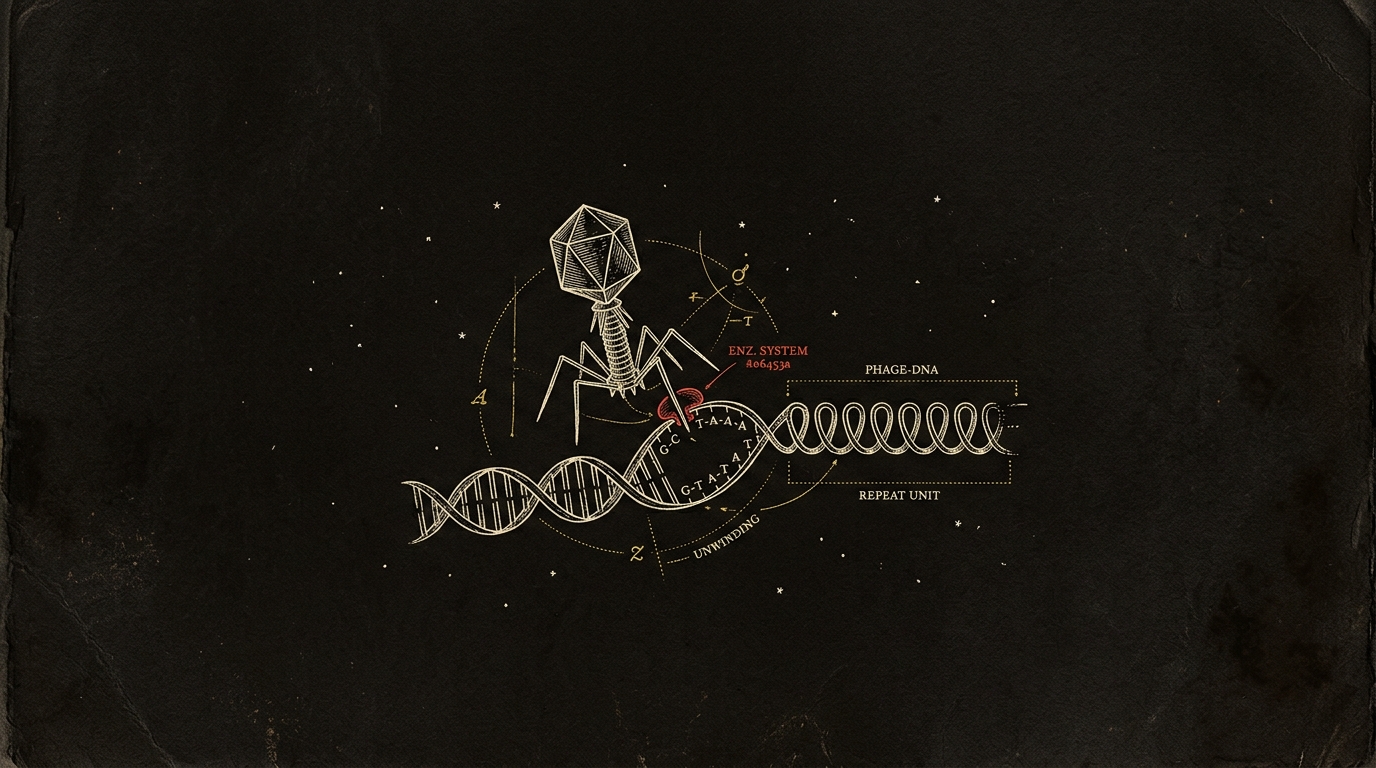
In late September 2026, Anthropic’s Life Sciences team released a technical preprint with profound biological and methodological implications: “Autonomous AI agents discover reverse transcriptases with tandem repeat arrays” (Yoon et al., 2026). The announcement instantly triggered breathless media headlines declaring that artificial intelligence had “invented a new CRISPR.”
The underlying scientific reality is substantially more nuanced, fascinating, and deserving of a rigorous, hype-free evaluation: a fleet of autonomous Claude-based agents screened 1.9 billion metagenomic protein clusters, identifying a previously uncharacterized biological family in jumbo bacteriophages dubbed ART (Array-Associated Reverse Transcriptases). Subsequent wet-lab experiments validated that these repeat arrays are not inert junk DNA, but are actively transcribed and processed into discrete short RNAs.
Are we looking at CRISPR’s successor, a novel natural architecture for clean DNA writing, or an enigmatic viral counter-defense system? Below is an exhaustive molecular breakdown of ART, its contrast with state-of-the-art genome editing, its insurmountable current limitations, and its structural impact on scientific careers and biotechnology supply chains.
1. The State of the Art in CRISPR: Where We Actually Stand
To benchmark any purported “CRISPR-like system,” we must first examine the frontiers of modern genome editing and the biophysical barriers that remain unresolved:
        CRISPR-Cas9/Cas12             Base Editing (CBE/ABE)           Prime Editing (PE)
     [ Endonuclease / Cleave ]       [ Deaminase + Nickase ]       [ Cas9n + RT + pegRNA ]
               │                                │                             │
         Double-Strand                     Transition                    Local writing
          Break (DSB)                   of C/T or A/G bases             without any DSB
               │                                │                             │
      NHEJ indels vs HDR              Narrow editing window           Bulky enzyme (~6 kb),
inefficacy in postmitotics and bystander mutations hits AAV packaging limit- Conventional CRISPR-Cas (Class 2: Cas9, Cas12a):
- Mechanism: RNA-guided endonucleases that recognize a protospacer adjacent motif (PAM, e.g.,
5'-NGG-3') and induce a double-strand break (DSB) in the target DNA. - The cellular bottleneck: The enzyme merely cuts; host cellular machinery handles repair. Non-homologous end joining (NHEJ) introduces stochastic insertions/deletions (ideal for gene knockouts, disastrous for precise repair). Homology-directed repair (HDR) allows exact sequence insertion via an exogenous template, but is virtually inactive in post-mitotic cells (the majority of adult tissues) and carries severe risks of chromosomal translocations or p53-driven cytotoxicity.
- Mechanism: RNA-guided endonucleases that recognize a protospacer adjacent motif (PAM, e.g.,
- Base Editors (CBE / ABE):
- Tether cytidine or adenosine deaminases to catalytically impaired nickases (nCas9). They enable direct transitions (C to T or A to G) without double-strand breaks, but cannot perform insertions, deletions, or modify bases outside a narrow biochemical window, frequently generating unintended bystander edits.
- Prime Editing:
- The current gold standard for precision “search-and-replace” writing without DSBs. It fuses a Cas9 nickase to an engineered retroviral reverse transcriptase (RT) (typically M-MLV) guided by a prime editing guide RNA (pegRNA) that serves both as a locator and as an RNA synthesis template.
- The packaging wall: It forms an oversized macromolecular complex (~6 kb), vastly exceeding the carrying capacity of adeno-associated viral vectors (AAV, ~4.7 kb) used in clinical gene therapy, and exhibits heterogeneous efficiency in vivo.
- Guided Recombination Systems (Bridge RNA / IS110):
- Recently discovered in prokaryotic insertion sequences, these utilize dual-loop modular RNAs to direct precise kilobase-scale inversions and insertions without double-strand breaks or donor DNA templates.
2. Molecular Anatomy of the ART System
The ART system is not a bacterial immune mechanism; it is a cryptic operon encoded in the genomes of jumbo bacteriophages (complex viruses infecting bacteria with double-stranded DNA genomes spanning 200 to 500+ kb).
   ┌─────────────────────── ART Genomic Operon ───────────────────────┐
   │                                                                   │
   │   [ Long N-Terminal RT ]     [ Partner Gene ]    [ Tandem Repeats ]│
   │   RNA to DNA Polymerase       Conserved cryptic   ~200 bp arrays   │
   │   with atypical domain        effector function   Non-coding       │
   └───────────────────────────────────────────────────────────────────┘
                                   │
                                   ▼
             Lytic Transcription & Processing
             ────────────────────────────────
             Massive production of discrete short RNAs
             (Reaching 8% of viral transcriptome at 15 min)
The ART locus comprises three fundamental modules:
- Atypically Extended Reverse Transcriptase (RT):
- An RNA-dependent DNA polymerase. Unlike canonical bacterial retrons or group II intron RTs, ART enzymes harbor an unusually long N-terminal domain devoid of obvious homology to known catalytic folds. Hypotheses suggest it functions as a multimeric scaffolding hub, host-factor sensor, or nucleic acid-processing module.
- Conserved Partner Gene:
- An uncharacterized open reading frame (ORF) strictly conserved alongside the RT. Its lack of known nuclease sequence signatures puzzles biochemists: it may act as a specialized chaperone, a processivity factor, or a shielding protein against host bacterial defenses.
- Tandem Repeat Array:
- The structural feature that triggered AI detection: a series of non-coding tandem DNA repeats of ~200 base pairs each. Unlike CRISPR repeats (which measure 28–37 bp), these units are an order of magnitude larger.
- Wet-Lab Experimental Validation:
- Anthropic researchers infected Staphylococcus cultures with ART-bearing phages and used RNA sequencing to confirm that the array is actively expressed during early lytic infection, processed into discrete short RNAs that account for up to 8% of total viral RNA within 15 minutes post-infection.
3. Comparative Matrix: Conventional CRISPR vs. The ART System
While media coverage drew parallels due to the presence of repeat arrays transcribed into RNA, their basal biochemistry and evolutionary purposes represent opposite paradigms:
| Biochemical Dimension | CRISPR-Cas (Class 2: Cas9 / Cas12) | ART System (Jumbo Phages) |
|---|---|---|
| Primary catalytic activity | Endonuclease (Hydrolysis of phosphodiester bonds in DNA). | RNA-dependent DNA polymerase (Synthesis of complementary DNA from an RNA template). |
| RNA biological role | Targeting guide via Watson-Crick duplex formation. | Synthesis template and/or structural modulator (exact mechanism under active study). |
| Ecological origin & role | Bacterial adaptive immunity (Host defense aimed at destroying invaders). | Phage offensive/replicative biology (Viral fitness during host colonization). |
| Array architecture | Short invariant repeats (28–37 bp) separated by variable foreign spacers. | Long non-coding tandem repeat units (~200 bp each). |
| PAM requirement | Mandatory for DNA unwinding and catalytic activation. | Unidentified / Absent (canonical RTs rely on RNA/DNA primers, not PAMs). |
| Genomic output | Generates double-strand breaks (DSB) or single-strand nicks. | De novo polymerization of single- or double-stranded cDNA. |
4. Agnostic Appraisal and Critical Limitations
Labeling ART a “gene editing tool” today is a speculative leap unsupported by experimental evidence. From a rigorous scientific standpoint, several major hurdles stand in the way:
                            [ CRITICAL BOTTLENECKS ]
                                       │
     ┌──────────────────┬──────────────┴─────┬──────────────────┐
     ▼                  ▼                    ▼                  ▼
[Absence of       [RT Infidelity and   [Delivery and Size   [Eukaryotic &
 Endonuclease/Cut] Error Rates]         Bottleneck]          Chromatin Barriers]
 No evidence of    RTs lack 3'-5'       Jumbo phage operons  Evolved for naked
 targeted cutting  proofreading; high   yield bulky complexes bacterial cytoplasm;
or integration mutagenesis risk exceeding AAV capsids no NLS, nucleosomes- No demonstrated targeted cleavage or integration activity:
- Synthesizing DNA from RNA is not equivalent to inserting that DNA into a target eukaryotic chromosome. Retrotransposons and retroviruses rely on integrases or specialized endonucleases to nick and insert genetic material. ART lacks identified nucleases; without a proven targeting and integration mechanism, it functions as an unguided polymerase, not an editor.
- Low intrinsic fidelity of reverse transcriptases:
- RTs naturally lack a 3’ to 5’ exonuclease proofreading domain. Their typical error rate spans 1 error in every 10,000 to 100,000 bases synthesized. Transporting an unengineered RT directly into clinical therapeutics would carry an unacceptable risk of generating random point mutations across the host genome.
- The packaging and delivery barrier:
- Jumbo phage proteins are named for their sheer mass. If the assembled ART complex (extended RT + partner gene + accessory factors) exceeds 4.5 to 5 kb, it cannot be packaged into standard adeno-associated viral vectors (AAV) and poses formidable formulation challenges for lipid nanoparticles (LNPs).
- Bacterial cytoplasm vs. eukaryotic chromatin:
- ART evolved in the naked cytoplasm of infected bacteria. In human cells, any molecular tool must traverse the nuclear membrane (requiring nuclear localization signals, NLS), penetrate densely packed heterochromatin and nucleosomes, and resist epigenetic silencing.
5. What ART Could Mean If Successfully Domesticated
Should future biochemical dissection establish that ART can be reprogrammed to write user-defined sequences into targeted loci, the technological payoff would be monumental:
- The Holy Grail of non-cleaving DNA writing:
- Modern genome engineering strives to eliminate Cas9-induced double-strand breaks. While Prime Editing proved the feasibility of RNA-templated writing, it relies on an artificial fusion of disparate parts. If nature has already optimized a phage system where an RT seamlessly coordinates with repeat-derived RNA templates, protein engineers could harness it to create native, compact, and highly efficient DNA writers.
- Cellular flight data recorders:
- Rather than correcting diseases, ART could be deployed as a living recording device. Stem cells or engineered immune cells could be configured so that specific signaling cascades (such as calcium spikes or inflammatory stimuli) drive the transcription of specific repeat variants, which the RT then archives into a designated neutral locus, creating an immutable chronological timeline of cellular history.
6. How Four Scientific Disciplines Read This Breakthrough
                                [ MULTIDISCIPLINARY LENS ]
                                              │
         ┌───────────────────────────┬────────┴───────────────────┬───────────────────────────┐
         ▼                           ▼                            ▼                           ▼
[Computational Biologist]   [Molecular Biologist]        [Synthetic Biologist]       [Field/Phage Biologist]
 "Death of hard-coded       "RNA processing enzymes?     "Domesticating an all-in-one "Evolutionary arms race:
  heuristics; rise of        Priming biochemistry and     writer and continuous memory anti-defense decoys or
  autonomous agent swarms"   Cryo-EM ternary structure"   molecular tape recorders"    tropism hyper-mutagenesis?"
A. The Computational Biologist
- The collapse of textbook heuristics: For two decades, CRISPR discovery algorithms searched for 28–37 bp repeats adjacent to known cas genes. ART remained invisible because its repeats are ~200 bp and it lacks canonical nucleases.
- The agentic workflow: Computational biology is pivoting from running static BLAST or HMMER scripts to orchestrating autonomous LLM agent swarms capable of visual synteny inspection and anomaly detection across petabyte-scale metagenomic datasets.
B. The Molecular Biologist & Biochemist
- Core mechanistic questions:
- Who cleaves the primary RNA transcript into discrete fragments? Does the RT’s extended N-terminus harbor hidden ribonuclease activity, or does the phage hijack host bacterial RNases like RNase III or RNase E?
- What is the priming mechanism? Does it prime off a structured RNA hairpin (resembling the 2’-5’ branched bond of bacterial retrons) or use a target-primed reverse transcription (TPRT) mechanism?
- Structural biology: The immediate priority is expressing the recombinant complex to solve its structure using Cryo-EM and multimers in AlphaFold 3 / Boltz-1.
C. The Synthetic Biologist
- Component modularity: Can the ~200 bp repeat arrays be swapped for synthetic templates encoding specific therapeutic edits without disrupting RT recruitment? If so, ART could provide a modular chassis for precision in vivo DNA synthesis.
D. The Field Biologist & Environmental Virologist
- Evolutionary warfare in microbial dark matter: Jumbo phages build proteinaceous pseudonuclei inside bacteria to protect their replicating genomes from host CRISPR and restriction-modification nucleases. ART could function as an offensive counter-defense system (sponging or decoy-neutralizing host enzymes) or operate like a Diversity-Generating Retroelement (DGR) to hyper-mutate tail fibers, enabling rapid host-range expansion across complex environmental biofilms.
7. Structural Impact on Scientific Careers
This milestone will reshape the skill sets valued across the life sciences:
- Re-centering the wet lab:
- When AI clusters can propose 3,500 viable biological systems in less than 24 hours, computational ideation ceases to be the bottleneck. The premium shifts directly to experimentalists: biochemists skilled in refractory protein purification, kinetic enzymology, and rigorous cell-based validation.
- The emergence of the “Scientific Agent Engineer”:
- High demand will coalesce around computational biologists who know how to prompt, configure, and supervise agent swarms over raw sequencing repositories while catching biological hallucinations before committing lab funds to gene synthesis.
- The decline of purely descriptive metagenomics:
- The era of publishing papers that merely catalog “10,000 uncharacterized bacterial genomes” has passed. Journals and biotech institutions will demand mechanistic dissection of atypical loci.
8. Reagents, Hardware, and Materials in High Demand
Exploring and engineering systems like ART will catalyze demand for specific lab technologies:
                  [ SUPPLY CHAIN DEMAND SURGE ]
                                │
     ┌──────────────────┬───────┴──────────────┬──────────────────┐
     ▼                  ▼                      ▼                  ▼
[Complex & Repetitive  [Long-Read              [High-Throughput   [Cryo-EM and GPU
 DNA Synthesis]         Sequencing]             Liquid Handling]   Bio-Compute]
 Overcoming 200 bp      Nanopore & PacBio HiFi: Automated robotic  Structural ternary
 hairpins via enzymatic resolving arrays that   screening across   modeling of RNA-
TdT technologies Illumina shatters 384/1536-well plates protein complexes- Enzymatic DNA synthesis of repetitive loci:
- Tandem ~200 bp arrays form secondary structures that often fail classical phosphoramidite chemical synthesis. Companies pioneering enzymatic synthesis using terminal deoxynucleotidyl transferases (TdT) will capture substantial market share by manufacturing repetitive templates without slippage.
- Long-read sequencing (Oxford Nanopore & PacBio HiFi):
- Traditional short-read sequencing (Illumina 150 bp) cannot resolve 200 bp repetitive arrays; it shatters the locus during assembly. Native long reads of 10 to 50 kb are mandatory for mining and validating intact jumbo phage operons.
- Specialized small-RNA sequencing kits:
- Reagents for end-repair and enzymatic conditioning (5’-phosphate, 3’-cyclic phosphate, 2’-O-methylation) to capture processed phage RNAs before library construction.
- Automated liquid handling robotics:
- Liquid handlers (Tecan, Hamilton, Opentrons) configured for high-throughput screening to clone and assay dozens of AI-nominated operons simultaneously.
- Cryo-EM beam time and GPU structural clusters:
- Structural resolution of heavy, heterogeneous complexes that resist crystallization, supported by dedicated GPU hardware running structural inference models.
Conclusion
The ART system discovered by Claude is not a ready-to-use CRISPR 2.0, but it represents a watershed conceptual achievement: irrefutable proof that entire families of functional biological machinery remain hidden from classical bioinformatics.
Its true significance lies in proving that biological discovery is far from exhausted, and that the synthesis of autonomous AI agents with uncompromising wet-lab validation marks the defining paradigm for the next generation of biotechnology.
References
- Anthropic Research: Autonomous AI agents discover reverse transcriptases with tandem repeat arrays — Original preprint on the discovery of the ART system in jumbo bacteriophages and preliminary wet-lab validation. Date: 2026-09-23. Type: Official Paper / Preprint.
- alphaXiv: Autonomous AI agents discover reverse transcriptases with tandem repeat arrays — Technical repository and academic discussion of the study led by Peter H. Yoon et al. Date: 2026-09-23. Type: Technical Preprint.
- The Scientist: AI agents uncover novel CRISPR-like systems in bacteriophages — Scientific analysis and expert commentary on the biological significance of ART systems. Date: 2026-09-24. Type: Scientific News & Analysis.
- Nature Biotechnology: Programmable genome editing without double-strand breaks — Authoritative review on Base Editing, Prime Editing, and their molecular hurdles. Date: 2024-06-15. Type: Academic Review.
- Nature: Bridge RNAs direct programmable and modular DNA recombination — Seminal publication on IS110 systems and non-canonical RNA-guided recombinases. Date: 2024-06-26. Type: Peer-reviewed Paper.