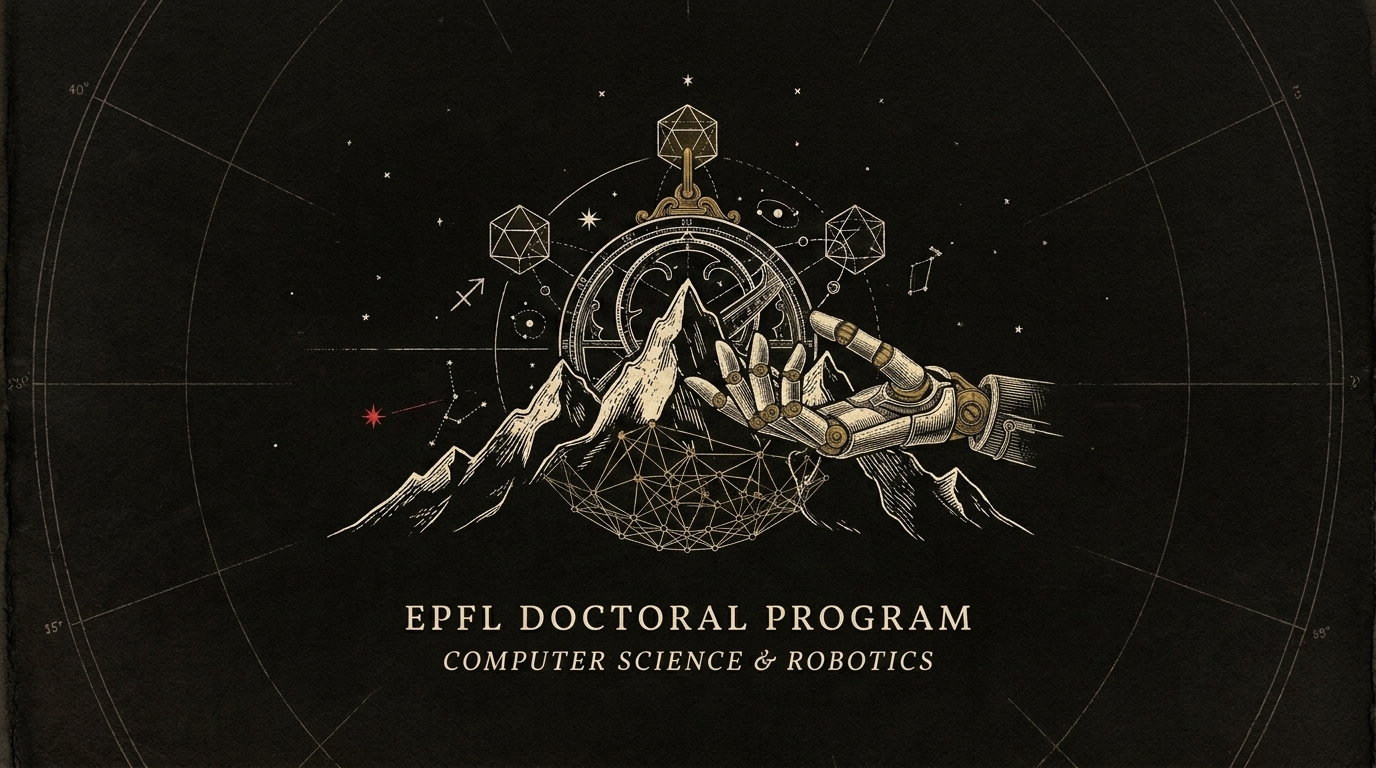
The École Polytechnique Fédérale de Lausanne (EPFL), consistently ranked among the world’s top 10 institutions in engineering and computer science, has opened its primary doctoral recruitment cycle for Autumn 2027 matriculation. Through the EDIC Doctoral School (Computer and Communication Sciences) and the EDRS Program (Robotics, Control and Intelligent Systems), EPFL treats doctoral researchers not as fee-paying students, but as formal Doctoral Assistants on full Swiss employment contracts, complete with statutory social security benefits, guaranteed annual salaries, and dedicated institutional research funding.
A defining structural advantage of EPFL’s EDIC program is its First-Year Fellowship Scheme: top-ranked admits are awarded non-restrictive departmental fellowships that allow them to perform laboratory rotations during their initial semesters before committing to a thesis director or dissertation project. Furthermore, EPFL formally provides a Direct-entry PhD pathway for exceptional Bachelor’s graduates, alongside traditional Master’s entries.
Funding Package & Benefits
Funding Package
- Full Swiss Employment Contract — Standardized gross annual compensation: CHF 55,225 (Year 1), CHF 56,225 (Year 2), CHF 57,225 (Year 3), and CHF 58,225 (Year 4 and beyond), structured with a 13th-month salary component (~CHF 3,750 to CHF 3,900 net monthly take-home after mandatory Swiss pension and social contributions).
- 100% Tuition Exemption — Zero tuition fees across the 4-year PhD journey (candidates only pay a minimal administrative semester registration fee of CHF 50).
- First-Year EDIC Fellowships — Full intellectual and financial freedom during the first 12 months, allowing students to explore diverse labs and build interdisciplinary partnerships before locking in an advisor.
- Conference & Travel Support — Generous travel allowances for presenting peer-reviewed research papers at tier-1 international conferences (NeurIPS, ICML, ICLR, CVPR, ICRA, RSS, SIGCOMM, OSDI).
- High-Performance Infrastructure — Access to national and institutional supercomputing GPU clusters (including dedicated modern accelerator clusters for foundation models) and cutting-edge physical robotics facilities.
Programs & Core Research Pillars
The recruitment cycle encompasses two synergistic doctoral programs based on the lakeside Lausanne campus:
| Doctoral School | Core Focus | Prominent Labs & Research Themes |
|---|---|---|
| EDIC (Computer & Communication Sciences) | Theoretical computer science, machine learning foundations, systems, network theory, and cryptography. | Machine Learning and Optimization (MLO - Martin Jaggi), Information and Network Theory, Natural Language Processing, Computer Vision Lab (CVLab - Pascal Fua). |
| EDRS (Robotics, Control & Intelligent Systems) | Embodied robotics, biomimetic locomotion, haptics, and autonomous systems control. | Learning Algorithms and Systems Laboratory (LASA - Aude Billard), Biorobotics Laboratory (BioRob - Auke Ijspeert), Reconfigurable Robotics Lab (RRL), Autonomous Mobile Robotics. |
Direct PhD from Bachelor’s vs. Master’s Entry
EPFL accepts applications through two tracks:
- Master’s Degree Entry (Standard): Applicants holding an M.Sc. in Computer Science, Applied Mathematics, Physics, Electrical/Mechanical Engineering, or related fields. Doctoral coursework requires earning 30 ECTS credits.
- Direct PhD Entry from Bachelor’s: High-performing graduates with a 4-year or 5-year Bachelor’s degree who demonstrate outstanding academic excellence and early research potential (e.g., preprints, strong thesis projects, or open-source software contributions). Direct-track students take targeted foundational courses in their first year prior to their formal candidacy examination.
Candidate Requirements & Application Materials
- Academic Qualifications: Bachelor’s or Master’s degree completed or expected by September 2027 in a quantitative discipline.
- Academic Transcripts: Complete official academic records from all higher education institutions attended (accompanied by certified English translations if issued in another language).
- Statement of Purpose (SOP): 2–3 pages outlining your technical trajectory, specific research questions you aim to pursue, reasons for choosing EPFL, and faculty members whose work aligns with your goals.
- Letters of Recommendation: Exactly three (3) confidential letters of recommendation from professors or research advisors who can speak directly to your research maturity and independent problem-solving skills.
- Curriculum Vitae: Comprehensive academic CV highlighting research experience, publications, software repositories (GitHub), and honors.
- Language Proficiency: Advanced proficiency in English (all courses, seminars, and laboratory work are conducted in English). GRE is optional.
Key Dates (2027 Cohort)
- EDIC Winter Application Deadline (Main Round): December 1, 2026 (23:59 CET) — Primary cycle considered for first-year departmental fellowships and the Spring Open House.
- EDRS Robotics Application Deadline: December 15, 2026 (23:59 CET).
- Letters of Recommendation Due: Within one week of the deadline (register referees as early as possible).
- Interviews & Virtual Screenings: January – February 2027.
- EPFL In-Person Open House (Lausanne): March 2027 (travel and lodging funded for shortlisted candidates).
- Doctoral Contract Start Date: September or October 2027.
How to Apply
- Official Application Portal: epfl.ch/education/phd/edic-phd-admissions
- Identify Potential Advisors: Explore the EDIC Faculty Directory or EDRS Participating Labs and identify 2–3 faculty members whose recent papers resonate with your interests.
- Register in the EPFL Doctoral Portal: Create your profile and complete the electronic application form for the winter round prior to December 1, 2026.
- Register Your Recommenders Early: Ensure your three referees receive the automated link and submit their letters before the deadline.
- Tailor Your Research Statement: Frame your statement around clear technical challenges rather than generic accolades, connecting your prior achievements to ongoing research directions at EPFL.
References
- EPFL EDIC Doctoral Admissions Portal — Official winter call guidelines, eligibility, and online submission portal.
- EPFL EDRS Robotics, Control & Intelligent Systems — Doctoral school structure, curriculum, and application deadlines.
- EPFL Salary Scales for Doctoral Assistants — Institutional salary regulations and employment terms for PhD researchers.